
Fiber vs Free-Beam CO₂ Laser Delivery: A Technical Comparison
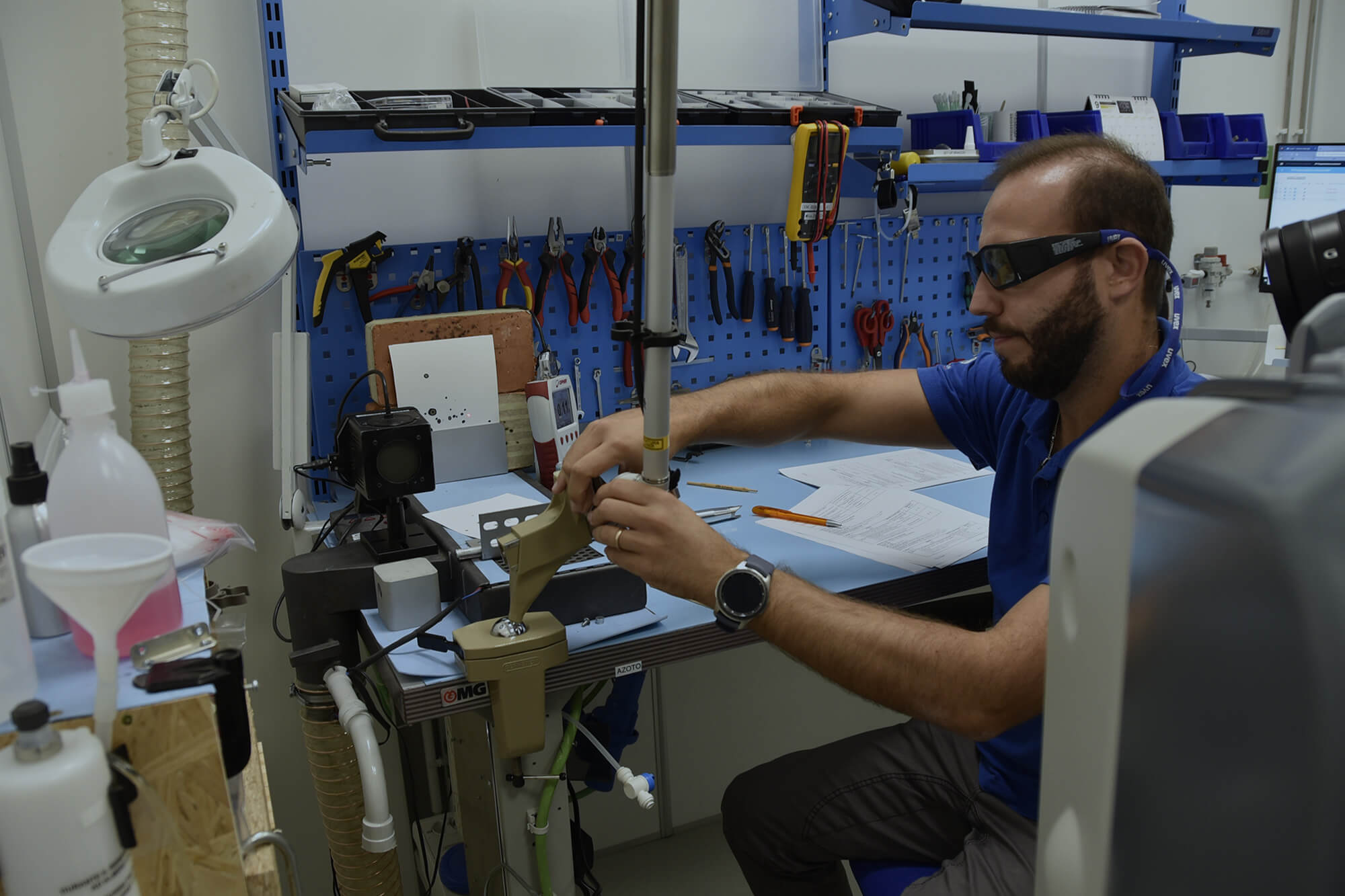
Both methods can achieve excellent tissue interaction when properly engineered. Yet in high-precision procedures, differences in energy stability and optical control can influence clinical outcomes.
The DEKA SmartXide² TRIO represents a new generation of free-beam CO₂ laser technology. It supports both articulated-arm (free-beam) and hollow-fiber delivery, pairing optical stability with flexible access for complex surgical environments.
Understanding CO₂ Laser Delivery Systems
CO₂ lasers emit infrared light at 10,600 nm, a wavelength strongly absorbed by water, making them ideal for soft-tissue cutting, vaporization, and coagulation. Generating light is only half the equation, however. The delivery system determines how that energy reaches the target.
Two laser delivery configurations dominate surgical applications:
- Fiber delivery, where light travels through a hollow or flexible waveguide.
- Free-beam delivery, where light travels through a mirror-based articulated arm in open air.
Both systems guide CO₂ energy to the handpiece, where it’s focused on tissue.
The choice between them determines ergonomics, energy consistency, tissue response, and maintenance requirements, all of which are critical to surgical efficiency.
Fiber Delivery Systems: Advantages and Limitations
Fiber-based CO₂ systems transmit energy through a flexible waveguide, typically composed of a hollow core with reflective internal coatings that allow infrared light to bounce along its length.
This design gives the operator a lightweight, easily maneuverable handpiece and excellent freedom of movement in confined surgical spaces. However, the same flexibility introduces trade-offs in beam quality and longevity.
Advantages of Fiber
- Flexibility and reach: Ideal for endoscopic or confined-field procedures.
- Compact handpiece: Reduces surgeon fatigue and simplifies instrument setup.
- Ease of positioning: Fiber lines can be routed around other equipment.
Limitations of Fiber
- Energy loss at bends: Each curve or kink in the fiber causes scattering and partial energy loss.
- Gradual degradation: Internal coatings degrade over time, leading to reduced power transmission and less predictable output.
- Beam instability: The profile can vary from shot to shot, affecting cutting precision.
- Higher maintenance: Replacement fibers are consumable components, adding to long-term cost of ownership.
Clinically, the limitations of fibre systems may result in slightly wider thermal margins and less uniform vaporization compared with free-beam CO₂ systems, acceptable for some general applications but less ideal for microsurgery or high-precision work.
Free-Beam Delivery Systems: Precision and Control
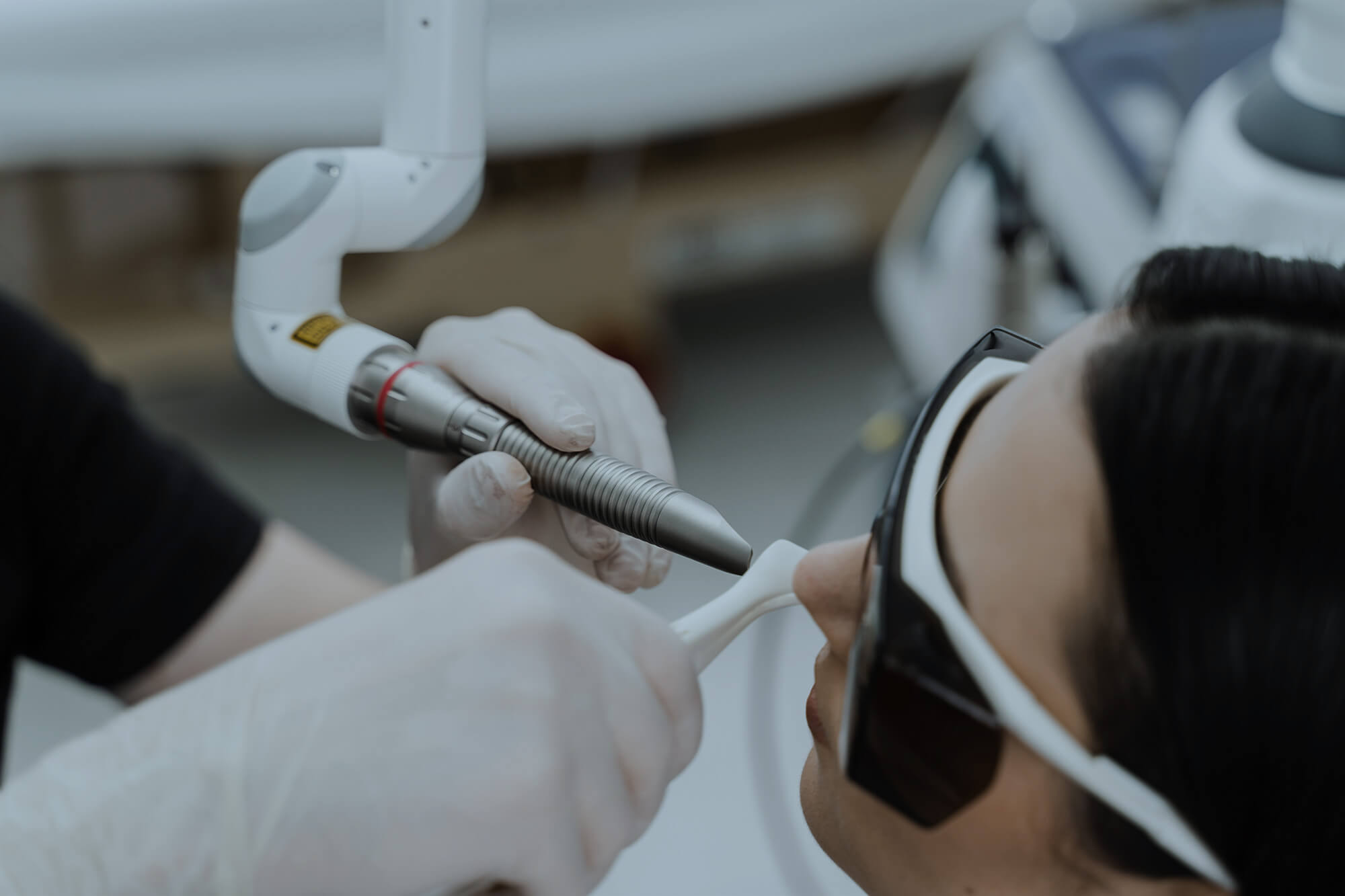
Free-beam CO₂ delivery systems transmit laser energy through an articulated arm using a series of mirrors enclosed within a rigid or semi-rigid housing.
The laser beam travels in open air (not through fiber) and maintains its original optical properties from source to handpiece.
Advantages of Free Beam
- Stable energy output: No internal attenuation or degradation over time.
- Superior beam quality: Maintains consistent focus and homogeneity.
- No disposable transmission components: Reduces maintenance and cost.
- Ideal for precision surgery: Enables fine control and repeatable results.
Limitations of Free Beam
- Reduced flexibility: The arm’s movement range can be slightly more limited compared with fiber optics.
- Requires calibration: Mirror alignment must be periodically verified for optimal performance.
Free beam remains the gold standard in disciplines that demand micro-scale accuracy, such as ENT, gynecology, and neurosurgery. Surgeons value the immediate feedback and consistent laser beam precision that mirror-based systems provide, especially during delicate dissection or tissue sculpting.
Comparing Clinical Outcomes and Maintenance Factors
Modern surgical lasers are increasingly versatile. Multi-wavelength and tunable systems now
When comparing fiber vs free-beam CO₂ laser systems, differences in optical delivery translate directly into clinical performance.
| Fiber CO₂ Delivery | Free-Beam CO₂ Delivery | |
|---|---|---|
|
Beam quality |
May vary with bends or wear; less consistent profile |
Highly stable, uniform beam across procedures |
|
Cutting precision |
Adequate for general use |
Superior control, cleaner incisions |
|
Thermal spread |
Slightly higher |
Minimal due to consistent focus |
|
Maintenance |
Fibers degrade; regular replacement |
Mirrors require alignment but are long-lasting |
|
Mobility |
Flexible and lightweight |
Slightly less mobile but balanced and stable |
|
Cost of ownership |
Higher consumable cost |
Lower over system lifespan |
In tissue interaction, energy stability plays a decisive role. A stable, homogenous beam yields cleaner incisions, less carbonization, and reduced collateral damage, attributes particularly valuable in minimally invasive procedures where precision margins are tight.
From an operational standpoint, free-beam systems also require fewer consumable parts, lowering total maintenance cycles and unplanned downtime.
The Best of Both Worlds: DEKA SmartXide² TRIO
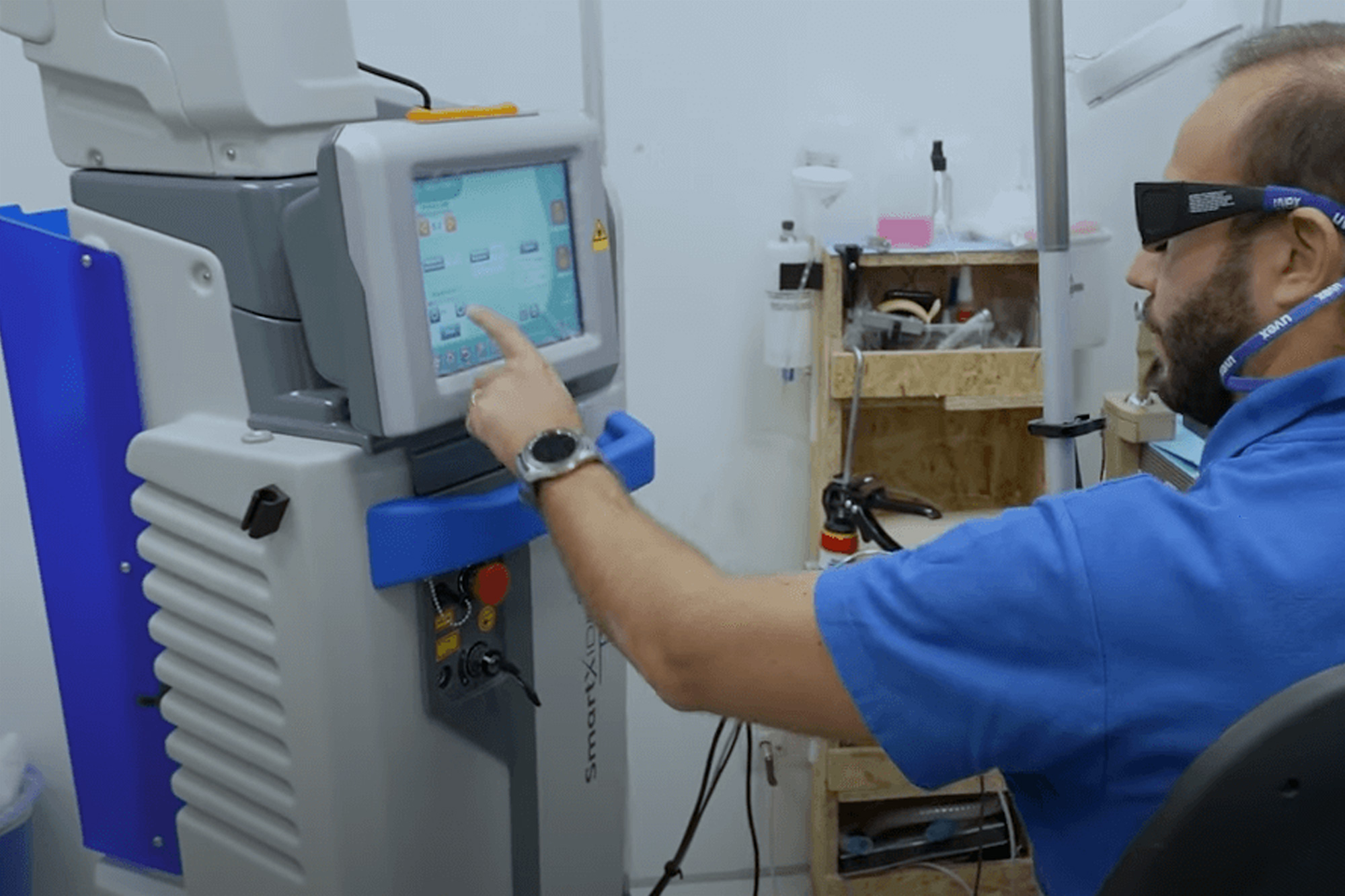
DEKA SmartXide² TRIO is a modern free-beam CO₂ laser technology built for surgical precision.
Its optical path uses high-reflectivity mirrors and adaptive calibration systems to preserve beam integrity throughout the articulated arm, while optional hollow-fiber delivery adds flexibility for endoscopic access.
Key features that distinguish DEKA Trio’s free-beam architecture include:
- Consistent beam homogeneity: Maintains a perfectly circular spot profile for uniform cutting and vaporization.
- Stable energy delivery: Optical losses are negligible compared to fiber systems, ensuring consistent fluence at the surgical field.
- Thermal control: Fine modulation of pulse width and power minimizes charring and thermal diffusion.
- Versatility across specialties: Widely used in ENT, gynecology, neurosurgery, and aesthetic medicine.
Clinicians report improved beam handling, predictable tissue response, and reduced maintenance downtime compared with legacy fiber systems.
For hospitals, that translates to both clinical and operational gains such as sharper precision, longer device lifespan, and fewer consumable costs.
Choosing the Right CO₂ Delivery System for Clinical Success
Both fiber and free-beam CO₂ laser delivery systems offer meaningful advantages depending on surgical needs.
Fiber configurations provide flexibility and maneuverability for confined environments, while free-beam designs deliver unmatched energy stability and optical precision.
For hospitals and clinics seeking maximum reliability and reproducibility across complex procedures, the flexible DEKA SmartXide² TRIO is the preferred choice. Its stable energy output, long-term cost efficiency, and precise beam control make it ideally suited for specialties that demand consistent, tissue-specific accuracy.
Talk to our team to learn more about CO₂ laser delivery systems and how DEKA’s technology can support your surgical goals.