
Selecting the Ideal Laser Wavelength for Tissue Precision
Understanding dynamics such as absorption, scattering, and reflection helps clinicians achieve greater precision and minimize thermal damage.
In practice, wavelength selection determines whether a laser vaporizes surface tissue cleanly or delivers energy deeper for coagulation and hemostasis.
Why Wavelength Matters in Laser Surgery
In every surgical application, laser wavelength tissue interaction determines how effectively energy is delivered, absorbed, and dissipated within the body. Each surgical laser wavelength, measured in nanometers (nm), produces a unique biological effect based on how it interacts with tissue chromophores.
These chromophores, primarily water, hemoglobin, and melanin, absorb light differently across the electromagnetic spectrum. When a laser’s wavelength aligns with one of their absorption peaks, energy is converted into controlled thermal effects that enable cutting, coagulation, or vaporization.
Understanding these principles of laser-tissue interaction helps surgeons achieve the desired balance between precision and penetration depth, minimizing collateral thermal damage while optimizing surgical outcomes.
This relationship between wavelength and tissue response underpins all forms of minimally invasive laser surgery.
Understanding Laser-Tissue Interaction Mechanisms
Laser energy can be absorbed, scattered, reflected, or transmitted. Each mechanism influences how efficiently light energy interacts with biological structures.
- Absorption converts optical energy into thermal energy. The higher the absorption coefficient of a tissue at a given wavelength, the more localized the effect and the more ideal use case for precision ablation or vaporization.
- Scattering redirects light within tissue, diffusing the energy and reducing precision but sometimes useful for broader coagulative effects.
- Reflection occurs at tissue interfaces and can limit energy transfer if the beam is not well-coupled.
Transmission happens when light passes through tissue without significant interaction, typically at wavelengths poorly absorbed by major chromophores.
Water-Rich Tissues
In water-dense tissue, such as mucosa or epithelium, laser wavelength tissue interaction is dominated by the absorption characteristics of water molecules. Wavelengths with high water absorption, such as CO₂ (10,600 nm) and Er:YAG (2,940 nm), transfer energy very efficiently at the surface, leading to rapid vaporization and shallow penetration.
This highly localized effect makes long infrared wavelengths ideal for precision ablation and cutting with minimal carbonization or thermal spread.
Surgeons favor these systems for procedures that demand extreme control, including:
- Microsurgical cutting and ablation, particularly in ENT, gynecology, and neurosurgery.
- Superficial lesion removal, where control over depth is critical.
- Procedures requiring minimal carbonization and rapid tissue recovery.
In these scenarios, the laser absorption and penetration depth are tightly coupled: a higher absorption coefficient in water ensures energy is confined to the target zone, supporting accurate and repeatable tissue removal.
Blood-Rich Tissues
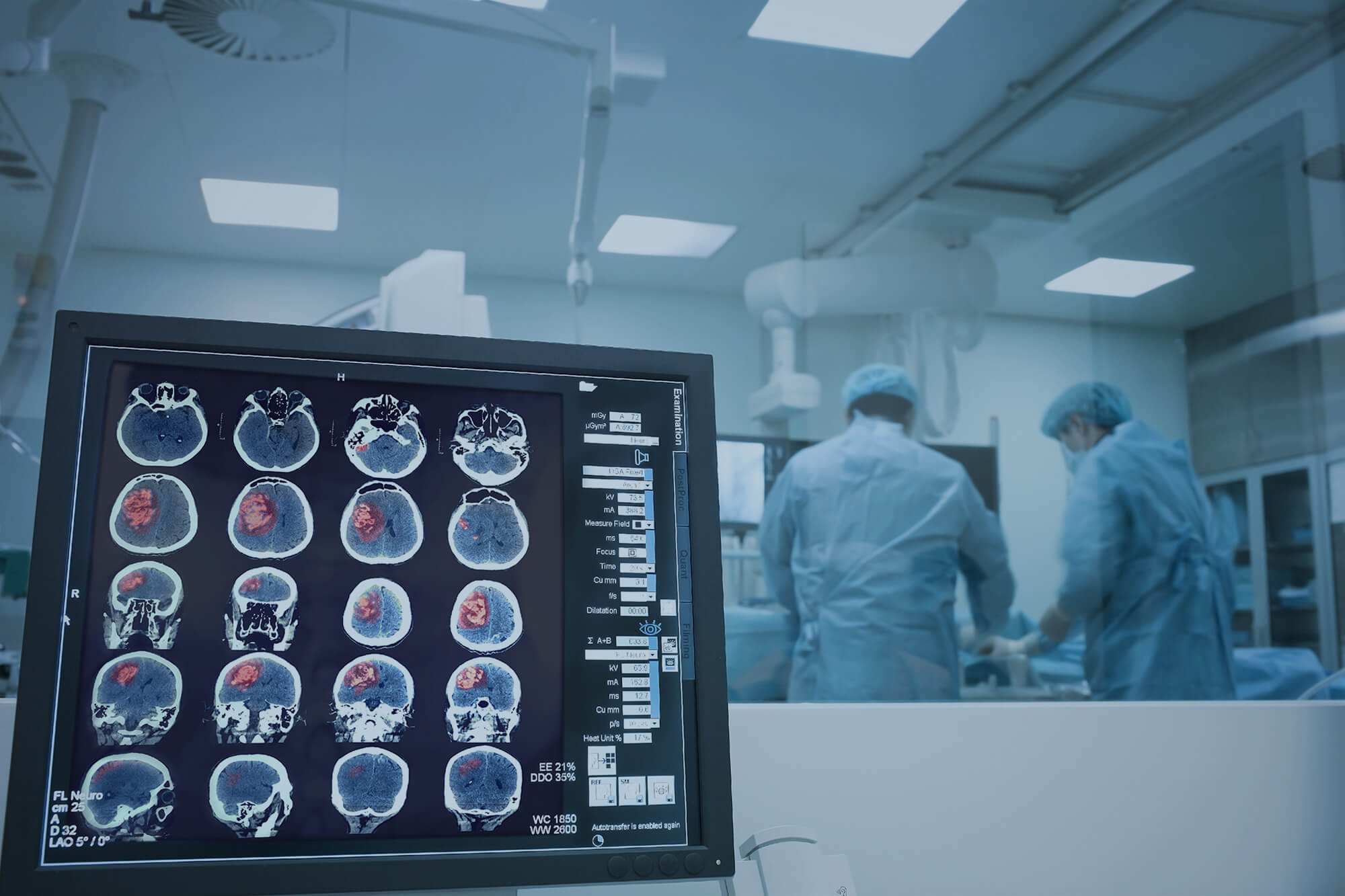
In vascular or highly perfused structures, hemoglobin becomes the dominant chromophore guiding laser wavelength tissue interaction. Near-infrared wavelengths, such as Nd:YAG (1,064 nm), diode, and Thulium (1,940–2,010 nm), penetrate more deeply before absorption, distributing heat over a broader volume of tissue.
This deeper laser absorption and penetration depth produces efficient coagulation and vessel sealing which are essential for applications where hemostasis and tissue shrinkage are desired.
These wavelengths are commonly used in:
- Urologic and vascular procedures, where bleeding control is paramount.
- Endoscopic or laparoscopic applications, where light delivery through fibers is advantageous.
- Tissue debulking or photocoagulation, where diffuse heating achieves desired shrinkage or necrosis.
Unlike surface-absorbed wavelengths, these surgical laser wavelengths trade some incision precision for broader thermal efficiency. The outcome is controlled coagulation, deeper penetration, and reliable sealing of blood vessels, key advantages in many minimally invasive procedures.
Comparing Wavelengths in Minimally Invasive Surgery
Every laser wavelength tissue interaction involves a trade-off between depth, control, and thermal diffusion. Surface-absorbed wavelengths excel at precise ablation with minimal damage, while deeper-penetrating wavelengths enable robust coagulation and hemostasis.
By aligning a laser’s wavelength with the optical properties of the target tissue, clinicians can precisely tune surgical outcomes to their procedural goals, whether it’s clean cutting, vessel sealing, or a combination of both. Understanding these wavelength-dependent effects is fundamental to choosing the right wavelength for any surgical application.
| Wavelength | Laser Type | Key Tissue Interaction |
|---|---|---|
|
10,600 nm |
CO₂ Laser |
Strong absorption by water for precise, superficial cutting with minimal thermal spread. |
|
2,940 nm |
Er:YAG Laser |
Very high water absorption for efficient ablation with minimal carbonization. |
|
1,064 nm |
Nd:YAG Laser |
Deeper penetration for strong coagulative and hemostatic effects, ideal for vascular tissues. |
|
1,940–2,010 nm |
Thulium / Diode / Ho:YAG Range |
Intermediate water absorption for balanced cutting and coagulation, widely used in urology and ENT. |
Advances in Multi-Wavelength and Tunable Laser Systems
Modern surgical lasers are increasingly versatile. Multi-wavelength and tunable systems now allow surgeons to switch or blend wavelengths depending on the clinical scenario.
Dual-source or variable-pulse technologies combine the precision of one wavelength with the hemostatic benefits of another.
For instance, CO₂ and diode hybrid systems can alternate between cutting and coagulation modes, minimizing the need for multiple instruments.
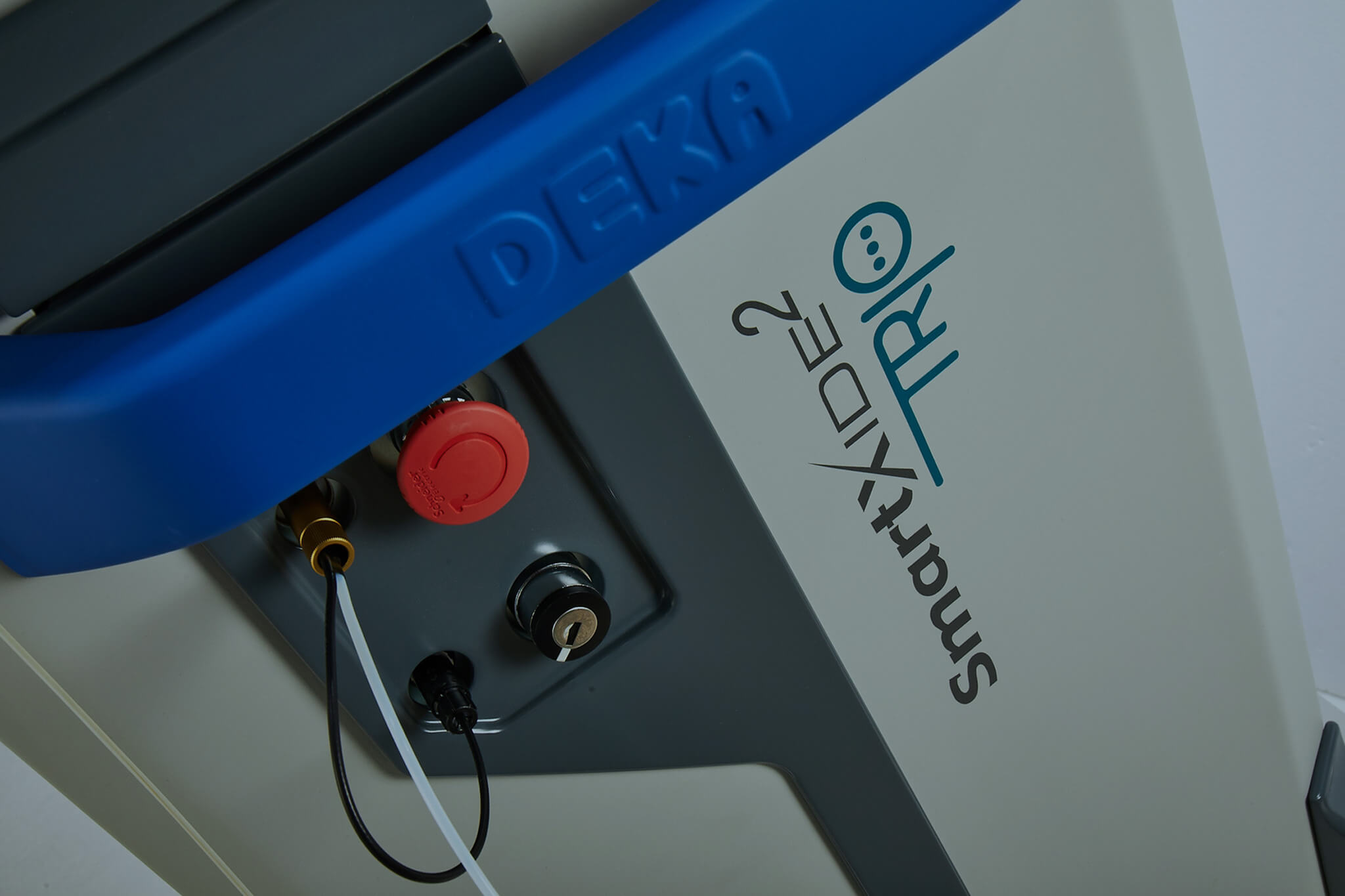
Advanced systems such as DEKA’s SmartXide² or Quanta’s dual-source platforms provide fine-tuned control over wavelength, pulse duration, and power delivery, enabling clinicians to tailor energy precisely to tissue response.
These innovations are transforming minimally invasive laser surgery, offering:
- Improved versatility across tissue types and procedures
- Reduced thermal injury through controlled pulse delivery
- Enhanced surgical visibility by minimizing bleeding
- Workflow efficiency by consolidating multiple modalities into one platform
The result is greater precision and safety for patients, and greater adaptability for clinicians handling diverse cases.
Selecting the Right Laser System for Clinical Goals
Choosing the right surgical laser is as much a clinical decision as a technical one. The optimal wavelength depends on several interrelated parameters:
- Target tissue composition: Is the tissue water-dense, vascular, or fibrous?
- Procedural goal: Cutting, vaporization, coagulation, or photothermal remodeling?
- Required penetration depth: Surface ablation vs. deep-tissue coagulation.
- Desired thermal margin: Precision versus diffuse heating.
- Clinical setting: Open surgery, endoscopic, or robotic-assisted access.
Surgeons and hospital procurement teams should also consider manufacturer reliability, maintenance requirements, and the availability of clinical evidence supporting wavelength performance for specific indications.
“At IML, we believe that understanding the science behind technology leads to better surgical results. By providing access to advanced, wavelength-optimized laser systems, we help clinicians achieve greater precision and patient safety across specialties”
– C.M. Bell, IML
Precision Begins with the Right Wavelength
By matching surgical wavelength to tissue absorption peaks, clinicians can minimize collateral damage, improve hemostasis, and achieve cleaner, faster outcomes, the hallmarks of modern minimally invasive surgery.
IML acts as a technical advisor through this process, helping hospitals assess which wavelength and delivery configuration best align with their procedural mix, patient population, and safety protocols.
Our team works directly with manufacturers to ensure that each system we recommend is optimized for clinical performance and compliance with international safety standards.